A Pinocchio costume for a school play needs three things the audience can read from the back row: a long nose, a puppet-style outfit, and one or two painted “wooden” details. The outfit usually comes together from clothes you already own; the nose is the piece most families buy. Our long fake nose for plays measures 6.29 in (about 16 cm) from base to tip, sits on a 1.77 in (4.5 cm) base and stays on with an elastic strap behind the head, so no glue is involved.
Below: how to fit the nose, two outfit directions, how to stage the “growing nose” moment with a nose that doesn’t grow, costume ideas for the rest of the cast, and the backstage fixes that keep a young actor comfortable through a show.
What a Pinocchio costume for a school play needs
Stage costumes work in shapes and colors, not fine detail. From the audience, Pinocchio is a long nose, short trousers, suspenders, a bright shirt and a small hat. Everything else is a bonus, so spend your time on those five.
- Long nose: the one element nobody can improvise convincingly from the closet.
- Short trousers: shorts, or pants rolled to just below the knee, with knee socks.
- Suspenders: real ones, or two lengths of wide ribbon pinned inside the waistband.
- A bright, solid shirt: solid colors read better under stage lighting than small prints.
- A small cap or hat: it finishes the look and also covers the nose strap.
- Puppet details: round rosy cheeks and drawn-on “joint” lines at the wrists or knees.
The long nose: size, fit and what it can’t do
The nose is a fixed shape that tapers to a rounded tip, in a single skin tone. At 6.29 in, it projects well past the face, which is exactly what the role needs. It also changes how an actor moves: the tip arrives before they do. Rehearse hugs with Geppetto, close two-person scenes and turns near scenery with the nose on, not only at the final dress rehearsal.
Fitting it on kids and adults
The nose is made for both kids and adults, but fit and strap pressure vary with head size, so do a trial fitting at least a few days before the show. Set the base over the actor’s own nose, then run the strap around the back of the head. A strap that sits above the ears is usually more comfortable than one pressing across them, and a cap pulled over the strap keeps it from creeping down.
If the actor wears glasses, check how the frames sit with the nose on. Have them say a few lines and sing a verse if the role has a song, since that is when an uncomfortable fit shows up.
Plan for the nose to come off between scenes instead of being worn for an entire two-act show. If it feels tight or uncomfortable, take it off rather than pushing through. Younger children should wear it with an adult nearby.
What the nose doesn’t do
The length is fixed; it does not grow. It’s a nose-only piece, not a mask, and the package holds just the nose and its strap. Hat, wig, scarf, makeup and adhesive are not included, which is why the rest of this guide focuses on building those from things you have.
Pinocchio costume checklist by time and effort
Pick one column per row. Mixing columns is normal: plenty of costumes pair a closet shirt with a hand-made hat.
| Element | Closet version (about 30 min) | Craft version (one evening) | Sewn version (a weekend) |
|---|---|---|---|
| Nose | Long nose prop | Long nose prop | Long nose prop |
| Trousers | Shorts or rolled pants, knee socks | Add contrasting felt cuffs or patches | Short trousers with a button front flap |
| Suspenders | Real suspenders, or ribbon pinned inside the waistband | Ribbon straps with large felt “buttons” | Sewn-on straps with real buttons |
| Shirt | Solid red, yellow or white shirt | Add a white felt collar | Puff-sleeve shirt |
| Bow tie | Wide ribbon tied in a bow | Felt bow on a safety pin | Fabric bow on an elastic neckband |
| Hat | Any small cap | Felt cap with a paper feather | Sewn felt cap with a stitched brim |
| Wooden details | Round blush circles on the cheeks | Joint lines drawn at wrists and knees | Wood-grain lines drawn on tights with fabric marker |
Storybook look or original-book look?
Most audiences recognize the storybook version: short trousers, suspenders, a bright shirt, a bow tie and a little cap, sometimes with a feather. If your production follows a picture-book or musical adaptation, that’s the safe choice.
Carlo Collodi’s original book, published in 1883, describes something stranger. Geppetto makes the puppet a suit of flowered paper, a pair of shoes from tree bark and a small cap made from bread. For a school production that sticks to the book, that’s a gift. A vest cut from flower-print fabric (paper tears too easily for a whole show), brown felt wrapped over plain shoes for the bark, and a soft beige felt cap for the bread all read clearly from the seats.
Making the nose “grow” on stage
Because the prop has a fixed length, the growing moment has to be staged. Three approaches work for school productions, from simplest to most involved:
- The sound cue. A rising slide-whistle note from the wings while the actor goes cross-eyed staring at the nose and the other characters gasp. It needs no extra props, and the audience fills in the rest.
- The sleeve. A lightweight paper or thin craft-foam cone, painted to match, that slides over the tip during the scene. Keep it very light so it doesn’t drag the strap down.
- The swap. A second, longer cardstock nose on its own elastic, changed during a turn upstage, behind another actor or in a blackout. Rehearse the swap as many times as any line.
Dressing the rest of the cast
A Pinocchio play has a large cast, and several roles have one signature detail that does most of the work.
- Geppetto: in the book, neighborhood children tease him about his yellow wig. A yellow wig or knit cap, a vest, rolled sleeves and a work apron cover it.
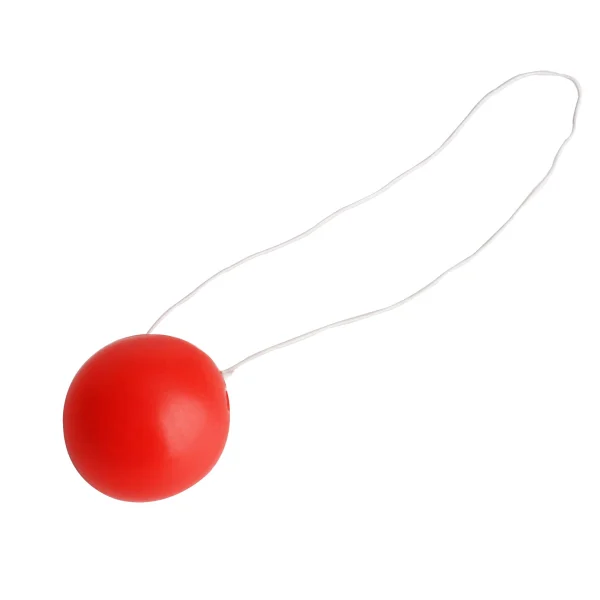
- Master Cherry: the carpenter in the first chapter gets his nickname from the tip of his nose, shiny and red like a ripe cherry. A red clown nose with string (1.77 in, molded plastic) is the fastest way to give him that nose.
- Puppet theater and circus scenes: the puppet show features classic stage characters such as Harlequin, and later Pinocchio, turned into a donkey, performs in a circus. Ensemble members in those scenes can take ideas from our clown costume basics.
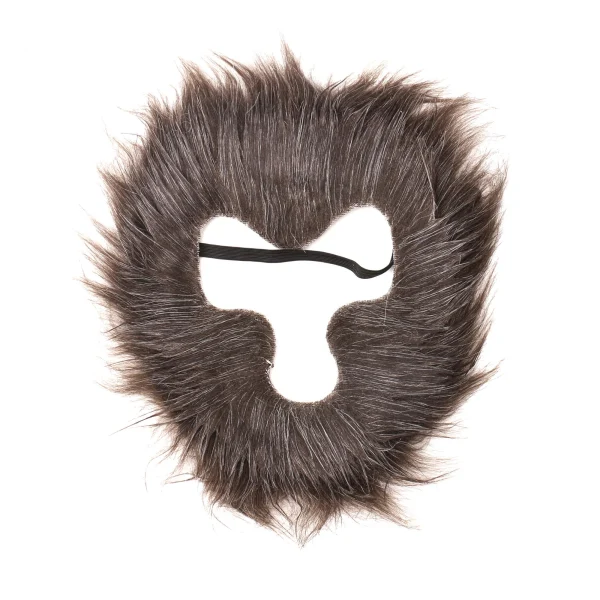
- Animal roles: the Talking Cricket, the Fox and the Cat, and the donkey scene all suit a simple mask-plus-base-layer approach; see easy animal costumes built around a felt mask.
- The Fairy: the original character is the Fairy with turquoise hair, so a blue-green wig and a long dress are enough.
For more noses, horns, hats and masks for other roles, browse our costume accessories.
Backstage quick fixes
| Problem | Quick fix |
|---|---|
| Nose strap slides down the back of the head | Pull the cap over the strap, or pin the strap to the inside of the cap with two bobby pins. |
| Nose feels tight after a long scene | Take it off between scenes and let the actor rest; don’t push through discomfort. |
| Suspenders slip off small shoulders | Cross them in an X at the back and safety-pin where they cross. |
| Hat falls off during movement | Two bobby pins crossed through the brim into the hair, or a thin elastic chin strap. |
| Cheek color smudges | Set cream blush with a little powder, or switch to powder blush. |
| Nose bumps a headset microphone | Check mic placement at the technical rehearsal so the boom sits clear of the prop. |
A small quick-fix kit covers most of these: safety pins, bobby pins, a spare length of elastic, needle and thread, and a compact of powder.
Comfort, safety and taking it to school
The nose is an external costume accessory, not a medical device. It leaves the eyes uncovered, but the tip sits in the lower edge of the actor’s view, so practice stairs and stage steps with it on. Ask young actors not to run in the wings while wearing it, where the tip can catch another child.
Schools often have their own rules about costumes, face coverings and props on the bus or in classrooms. Our guide on what to check before bringing costume props to school or events covers the questions to ask the teacher or director. Label the nose with the actor’s name and store it in a small box between rehearsals so the tip isn’t crushed in a backpack. For more ideas for stage productions, see our cosplay and stage play collection.
Step by step
- Do a trial fitting
A few days before the show, set the nose base over the actor's nose and run the strap around the back of the head, above the ears. Check comfort while they speak and sing.
- Build the outfit from the closet
Shorts or rolled pants with knee socks, suspenders or pinned ribbon, a bright solid shirt and a bow tie made from wide ribbon.
- Add a cap over the strap
A small cap finishes the look and holds the nose strap in place. Pin the strap to the inside of the cap if it creeps down.
- Paint the wooden details
Add round blush circles on the cheeks and, if you like, simple joint lines at the wrists or knees.
- Stage the growing nose
Choose a sound cue, a lightweight slip-on cone or a nose swap, and rehearse it like a line.
- Pack a quick-fix kit
Bring safety pins, bobby pins, spare elastic, needle and thread, and powder to the show.
- Plan rest breaks
Take the nose off between scenes rather than wearing it for the whole show, and remove it if it feels tight.
Frequently asked questions
Does the Pinocchio nose actually grow?
No. The long nose has a fixed length of 6.29 in. To show it growing, use a sound cue while the actor reacts, slide a lightweight paper cone over the tip, or swap to a longer cardstock nose out of the audience's view.
Will the long nose fit both kids and adults?
It's made for kids and adults and held on by an elastic strap behind the head. Head sizes vary, so fit and strap pressure differ from person to person. Try it on a few days before the show, and have younger children wear it with an adult nearby.
Do I need spirit gum or glue for a Pinocchio nose?
Not for this one. The elastic strap holds it, and no adhesive is included or needed. A cap worn over the strap helps keep it from slipping.
Can my child speak and sing with the long nose on?
The nose covers only the actor's own nose, so the mouth stays free. Rehearse lines and songs with it on to check comfort, and plan to remove it between scenes rather than wearing it nonstop.
What else do I need for a full Pinocchio costume?
The nose comes on its own. Add short trousers or rolled pants, knee socks, suspenders, a bright solid shirt, a ribbon bow tie, a small cap and round blush circles on the cheeks.
Can the long nose be used for other characters?
Yes. A long, pointy nose with a rounded tip works for other storybook roles such as elves, gnomes or a sly villain. For a green witch nose with a wart, see our witch costume accessories guide.
How do I hide the nose strap on stage?
Pull a cap or hat down over it, or tuck it under a wig. If the strap creeps down, pin it to the inside of the cap with two bobby pins.