If you want to know how to regrip a field hockey stick, the short version is this: peel off the worn wrap, clean and dry the handle, anchor the new grip at the top of the stick, spiral it down with steady tension and an even overlap, then trim the end and lock it with finishing tape. It is a simple job that needs scissors, a cloth and a few unhurried minutes.
The part people get wrong is planning. How far a strip reaches depends on how thick your handle is and how much each turn overlaps the last, so it pays to measure before you peel anything.
When should you replace a field hockey grip?
A grip is a wear part. Replace it when your hands tell you to, not on a fixed schedule. The usual signs:
- The surface has gone smooth or shiny and the stick turns in your hands, especially when it is wet.
- The wrap is torn, peeling at the edges or unwinding at the lower end.
- The cushioning has packed down and the handle feels hard.
- Turns have slipped, leaving gaps or lumps under your fingers.
Grip tape is for the handle only. It is a different product from blade tape, and it does not go on the head of the stick.
What you need to regrip a field hockey stick
- A new grip strip. Our field hockey stick grip with two PU wraps has a black perforated PU surface with a raised orange foam ridge, and each strip is 110 cm long and 2.5 cm wide (about 43.3 in x 1 in).
- Finishing tape for the lower end. The pack includes two black finishing tapes, one per strip.
- Sharp scissors.
- A dry cloth, plus a slightly damp one for dirt.
- A soft measuring tape, or a strip of paper and a ruler.
No stick is included with the grip pack; you are re-covering the one you already have.
How much of the handle will one grip strip cover?
Each turn around the handle uses up about one circumference of strip, and moves down the stick by the strip’s width minus the overlap. That gives a quick estimate:
Coverage = strip length x (strip width – overlap) / handle circumference
To find the circumference, wrap a soft tape or a strip of paper once around the handle where your top hand sits. The table below runs the math for a 110 cm x 2.5 cm strip on two example circumferences. The circumferences are examples, not measurements of any particular stick, so use your own number.
| Overlap per turn | Feel | Coverage at 10 cm circumference | Coverage at 11 cm circumference |
|---|---|---|---|
| None (edges just touching) | Thinnest | about 27 cm (10.8 in) | about 25 cm (9.8 in) |
| 3 mm (about 1/8 in) | Thin | about 24 cm (9.5 in) | about 22 cm (8.7 in) |
| 6 mm (about 1/4 in) | Medium | about 21 cm (8.2 in) | about 19 cm (7.5 in) |
| 10 mm (about 3/8 in) | Thick, cushioned | about 16 cm (6.5 in) | about 15 cm (5.9 in) |
Treat these as planning figures. A strip pulled snug lengthens a little, the first and last turns use extra, and a handle that tapers changes the numbers along its length. If the estimate comes up short of where you want the grip to end, reduce the overlap before you start instead of stretching harder halfway down.
Why stick length matters for grip length
A longer stick puts your hands farther apart in normal play, so players with longer sticks often want the covered section to run farther down. As a rule of thumb, set your hands the way you usually hold the stick and mark a point just below your lower hand; that is where you want the grip to end. If one strip will not reach that far at the overlap you like, a thinner overlap is the first adjustment to try.
How to replace a field hockey grip: remove the old one first
Start at the lower end. Cut or peel off the old finishing tape, find the loose end of the wrap and unwind it up toward the top of the stick. Go slowly so the wrap comes away in one piece instead of tearing into strips.
Then look at what is underneath. You will find either the bare handle or a base layer that is part of the stick. If the base layer is sound and smooth, you can wrap over it for a thicker handle. If it is ragged, lumpy or sticky, take it off too, because every bump underneath will show through the new grip.
Rub off loose adhesive with a dry cloth, wipe away dirt with a slightly damp one, and let the handle dry completely. A damp or dusty handle is the most common reason a starter end lets go.
How to apply field hockey grip tape
- Do a dry run. Before peeling any backing, wind the strip loosely down the handle at the overlap you planned. Check where it ends and adjust the overlap now.
- Anchor the top. On our strips the adhesive is only on a short starter section; the rest of the grip holds by tension and by the tape at the end. Peel the backing, press the starter end onto the very top of the handle, and wrap one level turn over itself so the top edge is square.
- Set the angle. On the second turn, tilt the strip slightly downward so it begins to spiral. The tilt decides the overlap, so set it carefully and then hold it.
- Spiral down. Turn the stick with one hand and feed the strip with the other, keeping a light, steady pull. On a ribbed strip like ours, the raised foam ridge is a handy visual guide: keep it the same distance from the previous turn all the way down.
- Check as you go. Every few turns, run your palm down the wrap. If you feel a wrinkle or see a gap, unwind to that point and redo it. This is easy now and impossible later.
- Trim the end. At your mark, hold the strip in place and cut it at an angle, so the final turn finishes as a level edge around the shaft instead of a pointed tail.
- Tape it off. Wrap the finishing tape around the lower edge, roughly half on the grip and half on the shaft, and press it down firmly. Lay it without stretching so it does not creep back.
Pull the strip snug, not tight. Too loose and the turns slide under your hands; pulled to its limit, the strip thins out and the cushioning you paid for goes with it.
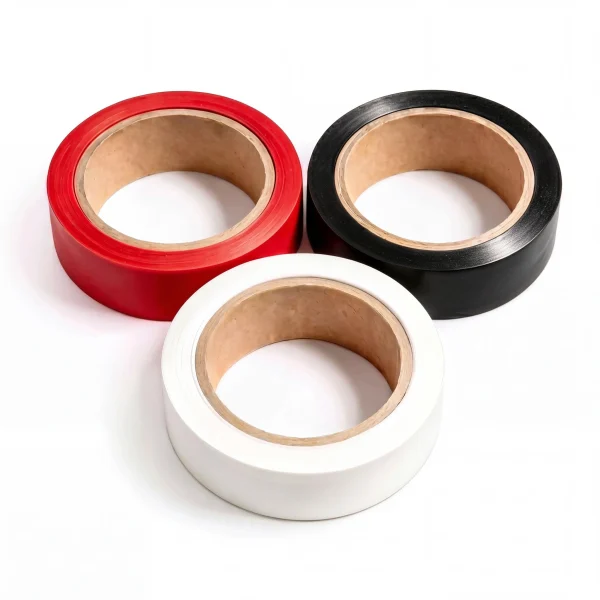
If you run short of finishing tape later, a few turns of vinyl tape do the same job. The wrapping habits are the same as in our guide on how to use electrical tape: overlap, no tension on the last turn, press the end down.
Common regrip mistakes and how to fix them
| Problem | Likely cause | Fix |
|---|---|---|
| Gaps between turns | The spiral angle got steeper partway down | Unwind to the last good turn and rewrap at the original angle |
| Wrinkles or puckers | Uneven tension, or wrapping over a lump | Unwind, smooth what is underneath, rewrap with a steady pull |
| Grip ends too high | More overlap than planned | Rewrap with less overlap; do the dry run first next time |
| Top turn lifts | Starter section pressed onto a damp or dusty handle | Clean and dry the handle and press the starter end down firmly |
| Lower end unwinds | Finishing tape only on the grip, or stretched when applied | Retape so it bridges grip and shaft, with no stretch |
How to hold a field hockey stick
A fresh grip is a good moment to check your hold. The basic grip, described here as general technique and not as coaching for a specific position, looks like this:
- Left hand at the top. It wraps around the top of the handle and does most of the turning of the stick.
- Right hand lower down. It sits a comfortable distance below the left, often around the lower end of the grip, and guides and supports the stick.
- Flat face to the ball. Field hockey is played with the flat side of the stick only, so the hold is the same for left-handed and right-handed players.
- Firm, not clenched. A relaxed hold lets the top hand rotate the stick freely.
Your coach will adjust hand spacing for different skills, and that spacing is exactly what the grip-length mark from earlier is based on.
How to make a new grip last
- Let the stick dry in open air after a wet session instead of leaving it zipped in a bag.
- Wipe mud and grit off the handle with a damp cloth; grit wears the surface.
- Check the finishing tape now and then and press down or replace it at the first sign of lifting.
- Keep the second strip and its finishing tape from the two-strip grip pack in your kit bag, so a worn grip can be changed before the next session.
You will find the grip with our other team-sport spares in sports and outdoors, including a 6×4 soccer net replacement if the backyard goal needs attention too.
Step by step
- Remove the old grip
Cut or peel off the old finishing tape at the lower end, then unwind the worn wrap from the bottom up.
- Clean and dry the handle
Rub off loose adhesive and dirt, wipe the handle and let it dry fully so the new grip sits flat.
- Measure and plan the overlap
Measure the handle's circumference and decide how far down you want the grip to reach, then pick an overlap that gets you there.
- Anchor the starter end at the top
Peel the backing from the adhesive starter section and press it around the very top of the handle, wrapping one level turn over itself.
- Spiral down with steady tension
Angle the strip slightly and wind it down the handle, keeping the same light pull and the same overlap on every turn.
- Trim the end
Where the grip should stop, cut the strip at an angle so the last turn ends in a level edge around the shaft.
- Lock it with finishing tape
Wrap the finishing tape around the lower edge, half on the grip and half on the shaft, and press it down all the way around.
Frequently asked questions
How do you regrip a field hockey stick without wrinkles?
Keep the pull light and constant and hold the same spiral angle from the second turn onward. Wrinkles almost always come from changing tension or from a lump under the wrap. If one appears, unwind to that turn and redo it right away.
Do I have to take the old grip off before putting on a new one?
Take off a worn outer wrap, because its tears and lumps will show through. A smooth, sound base layer that is part of the stick can stay if you want a thicker handle. If it is ragged or sticky, remove it and clean the handle first.
Which end do I start from when I apply field hockey grip tape?
Start at the top of the handle and work down toward the head. The adhesive starter section anchors the first turn at the top, and the finishing tape secures the lower end, where the wrap would otherwise begin to unwind.
Is 110 cm of grip tape enough for my stick?
It depends on your handle's circumference and your overlap. Measure the circumference and use the formula: 110 x (2.5 - overlap in cm) / circumference in cm. On a 10 cm handle with a 3 mm overlap that works out to roughly 24 cm of covered handle, before any stretch.
Is field hockey grip tape the same as blade tape?
No. Grip tape is a cushioned wrap for the handle, where your hands go. Blade tape is a different product for a different part of a stick. Our PU grip strips are made for the handle only.
Is the grip sticky on the back all the way along?
Not on our strips. Only a short starter section has adhesive. The rest stays in place through wrapping tension and the finishing tape at the lower end, which also makes the grip easier to unwind when it is time to replace it.
How often should I replace a field hockey grip?
There is no fixed interval. Change it when the surface turns smooth, the stick twists in wet hands, the cushioning feels flat or the edges start to peel. Players who train often or in the rain will get there sooner.