A foil balloon with a self-sealing valve fills with ordinary air from a drinking straw or a pump with a narrow nozzle. Fill to about 80 to 90 percent, pull the straw out, and the valve’s inner flap closes itself. Air won’t make the balloon float, so plan how you’ll hang or mount it first.
Why fill a foil balloon with air?
Air needs no tank and keeps a foil balloon full longer than helium does; the trade-off is that the balloon won’t float.
A UC Davis chemistry text on LibreTexts calculates that helium (4.00 g/mol) effuses through a balloon’s microscopic pores about 2.7 times faster than air (about 29 g/mol), and notes that Mylar’s dense film lets Mylar balloons hold helium for days. Air escapes more slowly still. Taped behind a cake table or hung on clear line, an air-filled foil balloon looks the same in photos as a floating one. For float time across balloon types, see foil vs latex balloons.
What you need
You need a self-sealing foil balloon, a straight drinking straw or a pump with a narrow cone nozzle, and ribbon, tape or line to display it.
- A self-sealing foil balloon (check the listing or the neck for a thin internal sleeve)
- A straight drinking straw, or a hand or electric balloon pump with a narrow cone nozzle
- Ribbon, tape, glue dots, fishing line or a stick, depending on the display
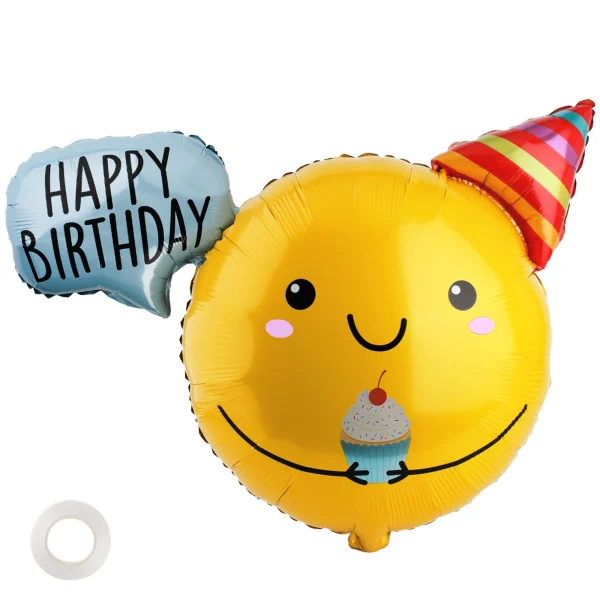
Several of our foil balloons include ribbon: the 30 x 24 inch smiley face birthday balloon and the 24 x 20 inch Feliz Cumpleaños gift box balloon each come with 33 ft (10 m), and the 30 x 20 inch snail balloon with 32.8 ft (10 m). All three have self-sealing valves and can be filled with air or helium. Pumps and helium aren’t included.
Straw, hand pump or electric pump?
A straw suits one to three balloons, a hand pump with a cone nozzle suits several large shapes, and an electric pump pays off at a dozen or more.
| Method | Suits | Watch out for |
|---|---|---|
| Drinking straw | One to three balloons; small and medium shapes | Slow for 30-inch shapes; use your own straw rather than sharing one |
| Hand pump, narrow cone nozzle | Several balloons; large shapes | Push the nozzle in only as far as needed so it doesn’t tear the sleeve |
| Electric pump, slim nozzle | A dozen or more balloons | Overfills in seconds; use short bursts and finish by hand |
| Ball-inflating needle | Not suitable | The metal needle can puncture the valve sleeve |
| Hair dryer or air compressor | Not suitable | Heat can melt seams; compressors overfill and split them |
How to fill it: the details that matter
The straw must reach past the narrow point where the valve sleeve meets the balloon body; short of that, air puffs back out instead of going in.
The valve is two thin plastic layers that press together once the balloon is full, so the straw has to hold them apart all the way in. If air comes back at your mouth, push the straw a little further.
Filling shapes evenly
Cakes, animals and gift boxes have narrow sections that fill last. Pause partway and press air gently from the full areas toward the flat ones, such as the head and tail of our snail, before you top the balloon up.
How full is full?
Stop when the balloon holds its shape but the seams still show a few soft wrinkles: about 80 to 90 percent, the fill listed for our smiley balloon. A drum-tight balloon splits a seam when the room warms up or someone squeezes it. If you overdo it, slide the straw back in and let a little air out.
Sealing
Keep the neck pinched while you remove the straw, then run two fingers along the valve from the balloon end toward the opening. This flattens the inner flap so the pressure inside holds it shut. Don’t knot the valve; tie ribbon around the neck below it, or through a hanging tab if your balloon has one.
How to display air-filled foil balloons
Air-filled foil balloons sink, so hang them on clear fishing line, tape them flat to a wall, or tape the neck to a stick standing in a weighted vase.
| Look you want | How to do it |
|---|---|
| Floating in mid-air | Tie clear fishing line or the included ribbon to the neck and hang it from a ceiling hook, curtain rod or light-duty removable hook. |
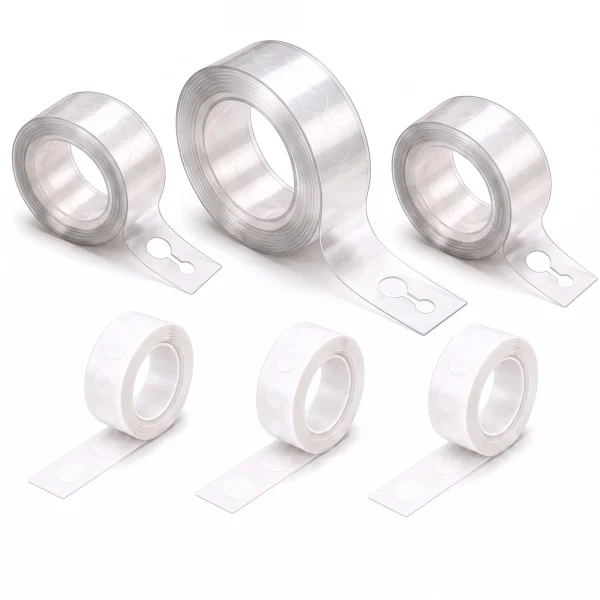
| Flat on a wall or backdrop | Use loops of tape or glue dots on the back; test them on a hidden area of painted walls first. |
| Standing on a table | Tape the neck to a slim dowel or balloon stick and stand it in a vase or cup weighted with sand or pebbles. |
| Part of a garland | Attach it to a latex garland with glue dots or a ribbon tie; see the balloon arch strip guide. |
| Gift or chair topper | Tie it with ribbon to the gift, chair back or table leg. |
Measure the spot before you fill. The 30 x 24 in (76 x 61 cm) smiley balloon needs about 2.5 ft of wall width. On a 6 ft (1.8 m) backdrop, the 24 x 20 in (61 x 51 cm) gift box balloon fills about a third of the width. The 22.4 x 14.5 inch birthday cake foil balloon is small enough to tie to a wrapped gift or hang behind a cake stand.
Placement tips for party day
Fill air balloons the night before: they have no lift to lose overnight, so you only need to top up any soft one with a few breaths in the morning.
- Keep away from heat and moving air. Sunny windows, heaters and lamps make the air inside expand and strain the seams. Ceiling fans and vents spin hanging balloons and tangle the line.
- Turn the message to face the room. Hanging balloons slowly rotate. A second line, or a small loop of tape on the back, keeps the printed side facing forward.
Troubleshooting
Most failures start at the valve flap: if a balloon deflates as soon as the straw comes out, press the valve flat from the balloon end toward the opening.
- It still leaks after pressing. Refill it and fold a small piece of tape over the valve opening as a backup.
- It’s soft the next morning. A cooler room makes the air contract, and a slow leak at a seam does the same. Warm the room or top it up with a few breaths.
- Air won’t go in. The straw isn’t past the narrow neck, or the sleeve is folded inside. Pull out, flatten the sleeve and try again.
- A seam split. It was overfilled or got hot. Seams can’t be repaired reliably, so use that balloon for a flat wall display or replace it.
Can you add helium later, and can you reuse it?
Yes, but empty the balloon completely first: air left inside adds weight and cuts lift, and a large shape may not rise at all.
To reuse a balloon, slide a straw in past the valve, press the air out gently, and store it flat without sharp creases.
Safety notes
The CPSC advises keeping balloons away from children younger than 8, especially latex balloons, which can present a choking hazard.
Keep uninflated foil balloons and torn pieces out of young children’s reach too, and trim long ribbon tails near babies and toddlers.
Outdoors, metallic foil adds a power-line risk. Alameda Municipal Power, a city-owned California utility, says released metallic balloons can touch high-voltage lines and cause explosions and outages. It advises tying helium-filled ones to a weight, not bundling them together, never releasing them outside, and never trying to retrieve a balloon caught in a power line. An air-filled balloon can’t float up into wires, but wind can carry a loose one, so keep it tied down. More decorating supplies are in our balloons and garland supplies collection.
Step by step
- Find the valve
Lay the balloon flat and locate the thin plastic sleeve at the neck or tail. Gently separate the sleeve's opening with a fingernail if the two sides are stuck together.
- Insert the straw or nozzle
Slide a straight drinking straw or a slim pump nozzle into the sleeve until it passes the narrow point where the valve meets the balloon body.
- Inflate slowly
Pinch the neck around the straw and blow or pump in steady breaths or strokes, letting the air spread into every part of the shape.
- Stop at 80 to 90 percent
Stop when the balloon is full but not drum-tight. Small wrinkles along the seams are fine; stretched, shiny-flat seams mean too much air.
- Seal the valve
Keep pinching as you pull the straw out, then run your fingers along the valve from the balloon toward the opening so the inner flap lies flat and closes.
- Hang or mount it
Tie ribbon to the neck below the valve or through the hanging tab if there is one, then hang, tape or mount the balloon where you want it.
Frequently asked questions
Will a foil balloon float if I blow it up with air?
No. The air inside weighs the same as the air around it, so there is nothing to lift the foil, and breath is no lighter. Hang it on fishing line from the ceiling or mount it on a weighted stick if you want it to look like it's floating.
Can I use a bike pump or ball pump on a foil balloon?
Only with a cone-shaped or slim plastic nozzle that fits inside the valve sleeve. Don't use the metal needle meant for sports balls; it can pierce the sleeve. Bike pumps move a lot of air per stroke, so go slowly.
How long do air-filled foil balloons stay inflated?
Longer than the same balloon filled with helium. Helium effuses about 2.7 times faster than air, and foil film holds even helium for days. How long yours lasts depends on the valve seal, the seams, room temperature and folds, so check it the morning of the party.
Do I need to tie a knot in a self-sealing foil balloon?
No. The inner flap seals itself when you press the valve flat. Tie ribbon around the neck below the valve or through the hanging tab, not in a knot across the valve opening.
Why won't my foil balloon stay inflated?
Usually the straw came out before the flap could close, or the flap is folded. Press the valve flat from the balloon end toward the opening. If air still escapes, a seam leak or pinhole is likely; tape over the valve helps only with valve leaks.
Can I fill an air-filled foil balloon with helium afterward?
Yes, but empty it completely first. Leftover air adds weight and reduces lift, and a large shape with a lot of air in it may not float.
How do I deflate a foil balloon to save it?
Slide a straw into the valve past the narrow neck so the flap opens, then press gently from the far end toward the valve. Store it flat in a folder or box and avoid hard creases.