Good stocking stuffers for woodworkers are supplies they use up and small tools they reach for every session: pencils, sandpaper, glue, blades, foam earplugs and safety glasses marked Z87+, plus one small tool matched to the kind of work they do. A set of metric drill stop collars, for example, suits someone who drills dowel or shelf-pin holes, but only if their bits are metric, so check one bit before you buy. If you can’t get a look inside their shop, stay with consumables and safety gear.
Stocking stuffers for woodworkers at a glance
Beginners, furniture makers, turners and carvers each use up different small things, and almost every idea needs one quick check first, such as metric or inch drill bits.
| Who it’s for | Stocking-size ideas | Check this one thing first |
|---|---|---|
| New to woodworking | Carpenter pencils, a 6 in (15 cm) combination square, a sanding block, foam earplugs, Z87+ safety glasses | Whether their tape measure reads inches or millimeters, so new measuring tools match |
| Furniture and cabinet makers | Marking knife, dowel centers, drill stop collars, a glue bottle with a silicone brush | Their dowel and bit sizes: metric (6, 8, 10 mm) or inch (1/4, 5/16, 3/8 in) |
| Woodturners | Sanding disks or rolls from 120 to 400 grit, thin CA glue, pen blanks, calipers | Which pen kit they turn, since blanks and bushings are sized to the kit |
| Carvers and whittlers | Basswood blocks, a leather strop with honing compound, a cut-resistant glove, thumb guards | Which hand holds the wood, because the glove goes on that hand |
| Every shop | Foam earplugs, Z87+ safety glasses, disposable dust masks | Whether they wear prescription glasses, so safety glasses fit over them |
| The woodworker who has everything | Sandpaper, glue, snap-off blades, pencils, painter’s tape, nitrile gloves | Their sander’s pad size and hole pattern, and the glue already on the shelf |
How to tell metric drill bits from inch bits before you buy stop collars
Our drill stop collars fit metric bits of 3, 4, 5, 6, 8, 10, 12 and 16 mm, so check their bits for millimeter sizes first.
- Read the marking. Metric bits and their cases are marked in millimeters, such as “5”, “5.0” or “5 mm”. Inch bits carry fractions such as “3/16”, and a case labeled in fractions of an inch holds inch bits.
- Measure if the marking has worn off. Calipers settle it. A 5 mm bit reads 5.00 mm, or 0.197 in; a 3/16 in bit reads 0.1875 in, or 4.76 mm. The gap is only 0.0094 in (0.24 mm), too small to see, but enough that a 3/16 in bit sits loose in the 5 mm collar and the set screw pushes it off center.
- Decide. If most of their bits are metric, the set fits their shop. If most are inch sizes, choose another idea from the table above.
| Common inch bit | Diameter | Nearest metric collars | Fit |
|---|---|---|---|
| 1/8 in | 3.18 mm | 3 mm / 4 mm | Too big for 3 mm; about 0.8 mm loose in 4 mm |
| 3/16 in | 4.76 mm | 5 mm | 0.24 mm loose |
| 1/4 in | 6.35 mm | 6 mm / 8 mm | Too big for 6 mm; 1.65 mm loose in 8 mm |
| 3/8 in | 9.53 mm | 10 mm | About 0.5 mm loose |
| 1/2 in | 12.70 mm | 12 mm / 16 mm | Too big for 12 mm; 3.3 mm loose in 16 mm |
A few less common inch sizes come within 0.1 mm of a collar, such as 5/16 in (7.94 mm) next to the 8 mm collar, but treat the set as a metric gift.
Stocking stuffers for beginner woodworkers
A new woodworker uses a carpenter pencil, a 6 in (15 cm) combination square, a sanding block and basic safety gear on nearly every first project.
- Carpenter pencils and a sharpener made for them. The flat body doesn’t roll off the bench, and a round sharpener won’t take it.
- A small combination square for square lines and depth settings, with its scale in the units on their tape measure.
- A cork or rubber sanding block with a few sheets each of 120, 180 and 220 grit.
- Foam earplugs and safety glasses; the safety section below covers the labels.
- A class voucher from a local woodworking school or makerspace, written on a card.
Stocking stuffers for furniture makers and joinery fans
Furniture and cabinet makers lay out and drill dozens of matching holes and joints, so a marking knife, dowel centers or depth stop collars get regular use.
- A marking knife. It scribes a finer line than a pencil and gives a saw or chisel a groove to start in.
- Dowel centers. These small pins drop into a drilled hole and mark the matching spot on the second board. They are sized like dowels, so copy the sizes they use, such as 6, 8 and 10 mm or 1/4, 5/16 and 3/8 in.
- A glue bottle with a silicone brush. Dried wood glue peels off silicone, so the brush lasts.
- A 6 in steel rule graduated in 1/64 in or 0.5 mm for machine setup.
Depth stop collars for rows of dowel and shelf-pin holes
Our Inxens drill bit depth stop collars are eight black carbon steel collars with inner diameters of 3, 4, 5, 6, 8, 10, 12 and 16 mm, plus a small L-shaped hex key, in a compact kit. The collar with the matching size label slides onto the bit and locks with its set screw, so every hole in a dowel joint or shelf-pin row stops at the same depth. Drill bits are not included.
Who it suits: someone who builds cabinets, bookcases or dowel-joined frames with metric bits, or who still marks depth with tape on the bit. Who should skip it: anyone whose bits are all fractional-inch sizes. Tighten the set screw snug, not hard, check that the collar won’t slide, and test on scrap; wipe the collars dry and store them away from moisture. Our walkthrough on how to set a drill stop collar covers measuring the depth.
Stocking stuffers for woodturners
Woodturners use up abrasives from about 120 to 400 grit, thin CA glue and turning blanks, so refills of those make safe gifts once you know their sizes.
- Abrasives. Rolls tear to any length; hook-and-loop disks must match the diameter of their sanding pad, for example 2 in or 3 in.
- CA (cyanoacrylate) glue. Turners use thin CA to fill small cracks and many use it as a pen finish, so a spare bottle gets used.
- Pen blanks. Blanks and bushings are sized to a pen kit, so note which kit they make before you buy either.
- Calipers. Spring or digital calipers check tenons and spindle diameters while the work is on the lathe.
Stocking stuffers for carvers and whittlers
Carvers go through basswood blocks and need a keen edge, so carving blanks, a leather strop with honing compound and a cut-resistant glove all get used.
- Basswood blocks. Basswood is soft and even-grained, and a few blanks around 1 x 1 x 4 in (2.5 x 2.5 x 10 cm) suit small whittling projects.
- A leather strop and honing compound. Carvers strop their knives often between sharpenings, and the compound runs out.
- A cut-resistant glove for the hand that holds the wood. A right-handed carver wears it on the left hand; compare sizes with a pair of work gloves they already wear.
- Thumb guards or tape for the thumb that pushes the blade.
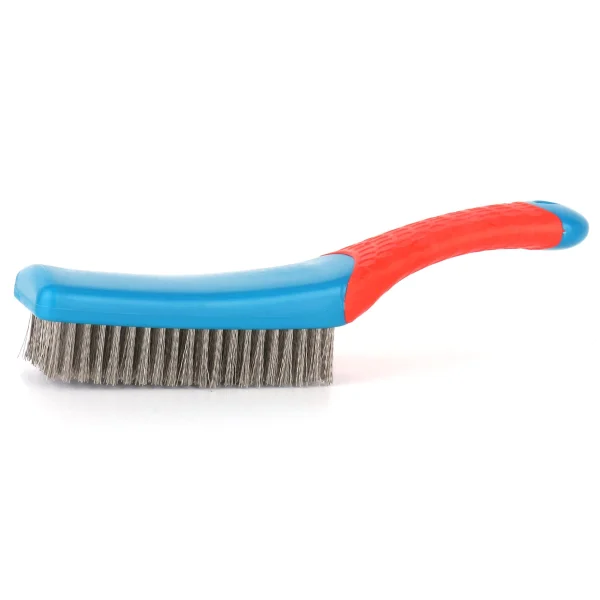
- A wire brush for texture. Brushing along the grain of oak, pine or cedar wears away soft earlywood and leaves the latewood raised; see how to wire brush wood for a textured finish.
Woodworking safety stocking stuffers: earplugs, glasses and dust masks
NIOSH’s recommended noise limit is 85 dBA for 8 hours, with the allowed time halved for every 3 dB louder, so 100 dBA reaches the daily limit in 15 minutes.
That limit is written for workplaces, but the National Institute for Occupational Safety and Health also lists power tool use among the noisy activities outside work that add to hearing risk.
How much an earplug really blocks
The NRR printed on earplug and earmuff packages is a laboratory number, and OSHA’s Technical Manual says the protection people actually get is likely lower. For workplace conditions, OSHA subtracts 7 dB from the NRR and then takes 50% of the rest. Worked example: an earplug labeled NRR 33 is estimated at (33 – 7) x 50% = 13 dB. Next to a machine that measures 100 dBA at the ear, that leaves about 87 dBA, which under NIOSH’s 3 dB rule allows roughly 5 hours a day instead of 15 minutes.
Doubling up helps less than adding the two ratings suggests: OSHA’s method credits only 5 dB extra for earmuffs worn over earplugs.
Safety glasses marked Z87+
UCLA’s Environment, Health & Safety office explains that eyewear marked ANSI Z87+ is rated for high impact, and that added codes show other protection: D3 for splash and droplets, D4 for dust and D5 for fine dust. Look for Z87+ on any pair you give, and for someone with prescription glasses, choose a style made to fit over them.
Dust masks for sanding days
NIOSH lists wood dust as a potential occupational carcinogen, sets its recommended exposure limit at 1 mg/m³ as a time-weighted average, and names eye irritation, dermatitis and asthma among the symptoms. A box of the disposable masks or respirators they already wear is a refill they will use; copy the model and size from the box in their shop, since fit varies by face.
Gifts for woodworkers who have everything
A woodworker who owns every tool still runs out of sandpaper, glue, pencils, blades and earplugs, so a refill of a supply they already buy is a safe gift.
- Sandpaper in their sander’s size. Many random orbit sanders take 5 in (12.7 cm) hook-and-loop disks with 8 holes, but 6 in pads and other hole patterns exist, so read the pad or an old disk first.
- The glue they already use, in the same type, rather than a new formula.
- Snap-off blades in their utility knife’s width, such as 9 mm or 18 mm, read off an old blade pack.
- Marking supplies: carpenter pencils, a mechanical pencil with 0.5 mm or 0.7 mm lead, and a white pencil that shows up on walnut and other dark woods.
- Painter’s tape, nitrile gloves and lint-free rags for glue-ups and finishing.
- Earplugs by the box, since a pair often ends up in a pocket or the trash after one session.
Experiences fit in a stocking as a card: a local woodworking class, makerspace shop time, or a trip together to a lumberyard.
What not to put in a woodworker’s stocking
Skip router bits and saw blades unless you know their sizes: a 1/2 in shank bit won’t fit a 1/4 in collet, and each blade fits one arbor size.
- Sharpening stones and jigs. Woodworkers settle on one sharpening system, and a stone from another can sit unused.
- Machine accessories such as sander pads or saw inserts, unless you have the model number.
- Metric tools for an inch-only shop, including our stop collars, or inch tools for a metric shop.
How to wrap small tools for a stocking
Put stop collars, their hex key and other small parts in one small box or zip bag so nothing gets lost in the stocking toe.
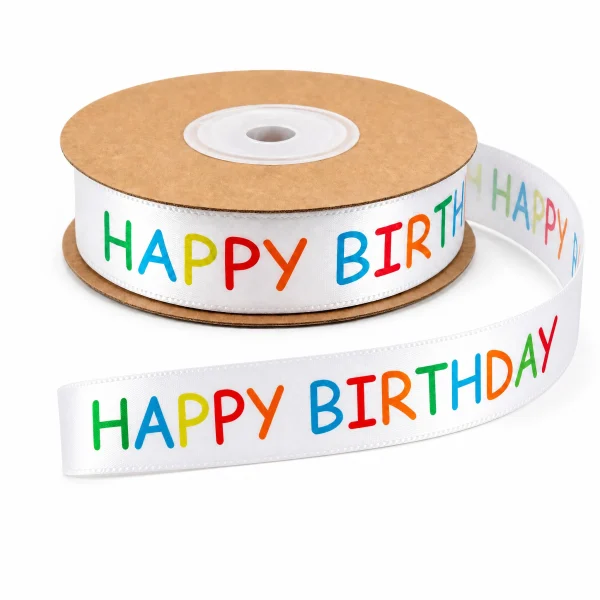
Keep snap-off blades in their dispenser, low in the stocking. A short length of ribbon makes a small box read as a gift; our ribbon guide shows how much a box needs. For more ideas sorted by person, from guitar players to bakers, browse our Christmas gifts and stocking stuffers.
Frequently asked questions
What are good gifts for woodworkers who have everything?
Supplies they burn through: sandpaper in their sander's disk size, the glue they already use, snap-off blades, carpenter pencils and a box of foam earplugs. Copy sizes from what is already in their shop so the refill fits. A card for a local class or a lumberyard trip together also suits someone with a full tool wall.
What are good gifts for woodworkers?
Start from the kind of woodworking they do. Furniture makers use marking and joinery tools, turners go through abrasives and blanks, carvers need wood blocks and a strop, and every shop needs earplugs and safety glasses. Ask before buying a power tool, since woodworkers often want new tools to match ones they already own.
What are the best stocking stuffers for woodworkers?
The ones that fit their shop: a supply they use up, or a small tool sized to their bits, sander or knife. Consumables and safety gear work for almost anyone. Sized items such as stop collars, sanding disks and blades only work once you have checked the size.
Are drill stop collars a good gift for a woodworker?
Yes, for someone who drills rows of dowel or shelf-pin holes with metric bits. Our set has eight collars from 3 to 16 mm and an L-shaped hex key, and each collar locks with a set screw so the bit stops at the same depth every time. Drill bits are not included.
Will metric drill stop collars fit inch drill bits?
Not the common sizes. A 1/4 in bit is 6.35 mm, too big for a 6 mm collar and loose in an 8 mm one, and a 3/16 in bit is 4.76 mm, 0.24 mm under the 5 mm collar. Match each labeled collar to a metric bit of the same size.
What earplugs should I get a woodworker?
A bulk box of foam earplugs is the simplest choice; compare the NRR numbers on the packages. OSHA's estimate for workplace use subtracts 7 from the NRR and halves the rest, so an NRR 29 plug blocks roughly 11 dB. Plugs worn under earmuffs add only about 5 dB by the same method.
What safety glasses should a woodworker wear?
Glasses marked Z87+, which UCLA's safety office describes as rated for high impact. Eyewear with a D4 or D5 code adds dust or fine dust protection, useful for sanding. For someone with prescription glasses, choose a pair made to fit over them.
What gifts can woodworkers make for Christmas?
Small projects from offcuts that finish in an evening or two: ornaments, coasters, a small box, a cutting board or a pen turned on a lathe. Use a food-safe finish on anything that will touch food.